



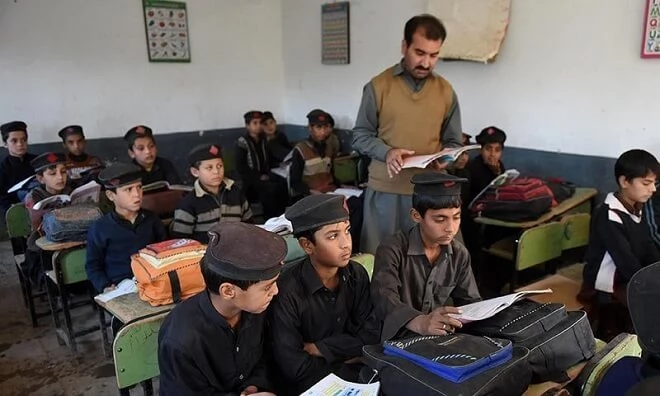
KARACHI: The Sindh government is considering a major education sector reform that could introduce a voluntary retirement package for surplus teachers while granting school headmasters greater authority in managing support staff recruitment.
According to officials, the Sindh Education Department has drafted a new policy aimed at addressing staffing imbalances in government schools, where the number of teachers in some institutions exceeds actual requirements based on student enrollment.
As part of the proposed reforms, teachers identified as surplus may be offered a golden handshake scheme, allowing them to opt for voluntary early retirement with financial benefits. The move is intended to help streamline staffing levels and improve the allocation of educational resources across the province.
Sindh Education Minister Syed Sardar Ali Shah said the exact number of surplus teachers and active students will be determined after the completion of an ongoing verification process using facial recognition technology. The exercise is expected to provide accurate data on school enrollment and staff deployment.
He stated that teachers found to be surplus would have the option to accept a voluntary retirement package rather than continue in positions where staffing exceeds institutional needs.
The proposed policy also includes administrative reforms designed to improve school management. Under the plan, recruitment powers for lower-grade employees would be delegated to school headmasters, enabling them to hire essential support staff such as watchmen, gardeners, office attendants, and other non-teaching personnel according to local requirements.
The education minister noted that the department continues to face financial pressure due to excessive recruitment carried out in previous years. He said reducing surplus positions could help optimize government spending and ensure that educational resources are directed where they are most needed.
Officials believe the reforms will create a better balance between teacher availability and student enrollment, improve operational efficiency in schools, and strengthen the overall management of Sindh’s public education system.
The proposed policy is currently under consideration and is expected to be reviewed before its implementation across government schools in the province.
![9th Class Result [2026] BISE Multan Board](https://www.eduvision.edu.pk/edu_news/images/thumbs/multan-board.webp)