



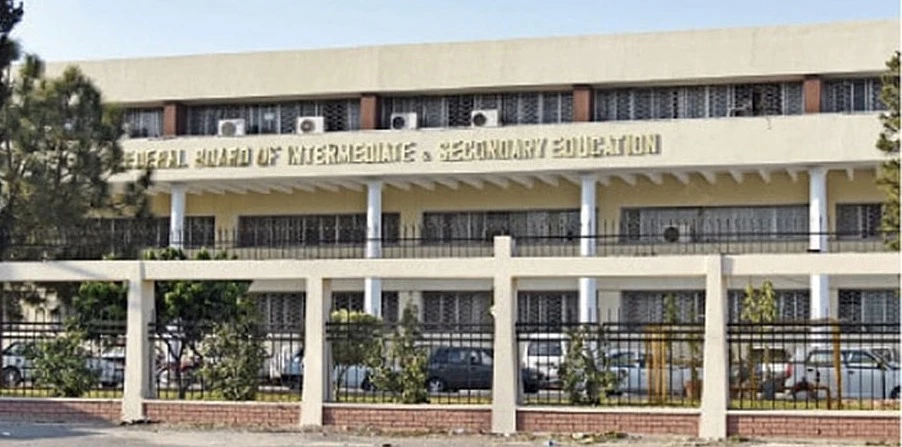
The Federal Board of Intermediate and Secondary Education (FBISE), Islamabad, has announced significant reforms to its examination system aimed at improving conceptual learning, critical thinking, and assessment standards. The new examination pattern will gradually be implemented from 2026 and will affect students from Class 9 onward.
These changes were discussed during a meeting chaired by FBISE Chairman Qaiser Alam, with participation from educational experts, board officials, and academic stakeholders.
Key Changes in FBISE Examination System
1. Equal Weightage for Objective and Subjective Questions
Under the new examination structure:
- 50% of the paper will consist of Objective (MCQ-based) questions
- 50% of the paper will consist of Subjective questions
This change is intended to balance knowledge recall with analytical and written expression skills.
Subjects Included in the First Phase
The revised examination model will initially be introduced in:
- Mathematics
- Physics
- Chemistry
- Biology
- Computer Science
Implementation Timeline
2026
The new examination system will begin for Class 9 students.
2027
The revised pattern will be implemented in the first annual examinations of Class 10.
2028
The new system will be fully implemented in the first annual examinations of Class 11.
This phased rollout will allow schools, teachers, and students sufficient time to adapt.
Focus on SLO-Based Assessment
FBISE has emphasized that students and teachers should carefully study:
- Student Learning Outcomes (SLOs)
- Assessment guidelines
Future examination papers will increasingly focus on conceptual understanding rather than rote memorization.
Important Changes in Islamiat and Pakistan Studies
Class 9 Islamiat
- Examination will consist of 100 marks
- Pakistan Studies will not be included in Class 9
Class 10 Pakistan Studies
- Examination will consist of 100 marks
- Islamiat will not be included in Class 10
This separates the two subjects into different grades, allowing students to focus more effectively on each subject.
Changes in Translation and Vocabulary Assessment
According to the announcement:
- A dedicated vocabulary book is being considered for translation-related preparation.
- Translation marks may be distributed equally between Urdu and English.
- Students will be expected to learn selected vocabulary and meanings.
Vocabulary Requirements
Class 9
- Approximately 15 selected Surahs will be included.
- Students will learn the meanings of chosen Arabic words.
- Around 100 key words may be required.
Class 10
- Approximately 17 selected Surahs will be included.
- Students will memorize meanings of selected vocabulary.
- Translation and understanding of concepts will receive greater emphasis.
Arts Group Changes
The notification also mentions updates for Arts Group students:
- Functional English
- Functional Urdu
- Functional Mathematics
However, General Mathematics will not be included for Class 9 under the revised structure, according to the information shared.
Why These Reforms Matter
The new FBISE examination framework reflects a broader shift toward:
- Concept-based learning
- Critical thinking skills
- Better assessment of student understanding
- Reduced reliance on rote memorization
- Alignment with modern educational standards
Students who focus on understanding concepts, mastering SLOs, and developing problem-solving skills are expected to perform better under the revised system.
What Students Should Do Now
To prepare for the upcoming changes, students should:
- Study according to SLOs rather than only past papers.
- Strengthen conceptual understanding in science subjects.
- Practice both MCQs and descriptive answers.
- Improve vocabulary and translation skills.
- Follow official FBISE updates for final implementation details.
The FBISE examination reforms represent one of the most significant changes to Pakistan's federal board assessment system in recent years. With a 50-50 objective and subjective paper pattern, increased emphasis on SLOs, and gradual implementation from 2026 onward, students will need to focus more on conceptual learning and analytical skills than ever before.
These reforms are expected to improve educational quality, encourage deeper learning, and better prepare students for higher education and future careers.
![9th Class Result [2026] BISE Multan Board](https://www.eduvision.edu.pk/edu_news/images/thumbs/multan-board.webp)