


LAHORE: In a landmark step toward inclusive education, the Government of Punjab has approved a separate religious curriculum for non-Muslim students for the first time in the province's history.
The Punjab Curriculum and Textbook Authority (PCTA) has officially issued a notification announcing the implementation of new religious textbooks for minority students from the 2026-27 academic session.
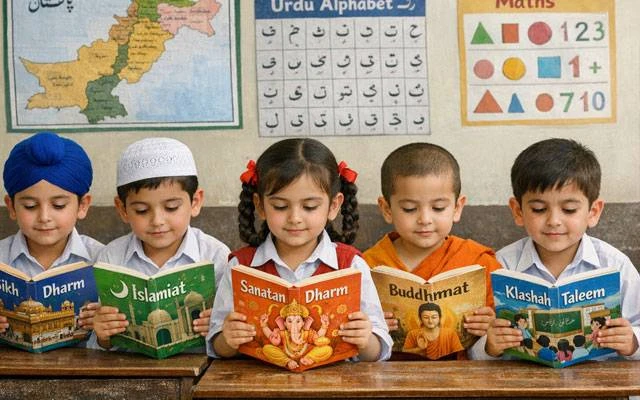
According to the notification, students belonging to different minority communities will now be taught subjects based on their own religious beliefs and traditions. The initiative aims to provide equal educational opportunities and ensure that minority students receive religious education relevant to their faith.
Under the newly approved curriculum:
- Christian students will study Christian Education from Grade 1 to Grade 9 and Grade 11.
- Hindu students will be taught Sanatan Dharam from Grade 1 to Grade 3.
- Sikh students will study Sikh Dharam from Grade 1 to Grade 3.
- For the first time, students from the Kalasha community will have access to Kalasha Education textbooks.
- Buddhist students will be taught Buddhism from Grade 1 to Grade 3.
- Zoroastrian students will study Zoroastrianism from Grade 1 to Grade 5.
Education officials said the move is designed to promote educational inclusion, religious freedom, and equal access to learning opportunities for all communities across Punjab.
The approved curriculum will be implemented in schools from the 2026-27 academic year onward. The notification has already been circulated to educational boards, district education authorities, and other relevant institutions to begin preparations for its rollout.
Experts believe the introduction of faith-specific religious education for minority students is an important development in Pakistan's education system. It reflects ongoing efforts to recognize the diverse religious communities living in the province and provide them with educational content aligned with their beliefs.
The decision is expected to benefit thousands of minority students studying in public and private schools across Punjab, helping create a more inclusive and representative learning environment.
![9th Class Result [2026] BISE Multan Board](https://www.eduvision.edu.pk/edu_news/images/thumbs/multan-board.webp)